
0. Background
E-commerce of affordable artworks and design products.
100 Design and Art Shop(100DAS) is an online store featuring affordable artwork and design products aiming at introducing the beauty of art and design into daily life. The professional art editors select works to ensure high quality while also promoting aesthetics in everyday life. 100DAS is committed to breaking down the old pyramid in the art world by building a direct connection between the emerging artists and the public, in order to lead more people to touch and feel the charm of art and design.

1. Research
Research Goals
- Define areas of opportunities that can provide the most user-centric values.
- Find out the pain points of users and design solutions.
- Study the pattern of people search and purchase an artwork.
Research Plan
Secondary Research: Market research, Competitors analyst
Empathy Research: Individual interview + observation+Survey
Assumptions:
- There is no clear pricing regulation: the artwork prices are generally higher than the public’s expectation. The market lacks specific regulation and rational framework, which cause the price confusion.
- Large amounts of information that is unfiltered always reduce the desire to buy as the potential consumers browsing the webpage/app.
- The natural obstacle of art e-Commerce/Hinders of online art trade: buyers cannot get to see the artwork in person, which means they cannot make sure the quality as well as the authenticity in some cases.
- When it comes to art, the public has a sense of distance. Without professional knowledge, art, especially contemporary art is hard to understand. There are price barriers and knowledge barriers between artworks and public.
Secondary Research
Market Research
- Market Demand and Prospect
The public has entered the early stage of pursuing individual life quality and participating in the art and design market. China has a vast market. According to McKinsey’s 2011 data report: by 2020, the annual income of 51% of China’s population will reach the range between 10 thousand and 20 thousand RMB. These people are more willing to spend money than their previous generations; 40% of their income will be paid. However, in the big market of art dealing, we still need to specify our target user group and price point by market segmentation.
Competitor analyst
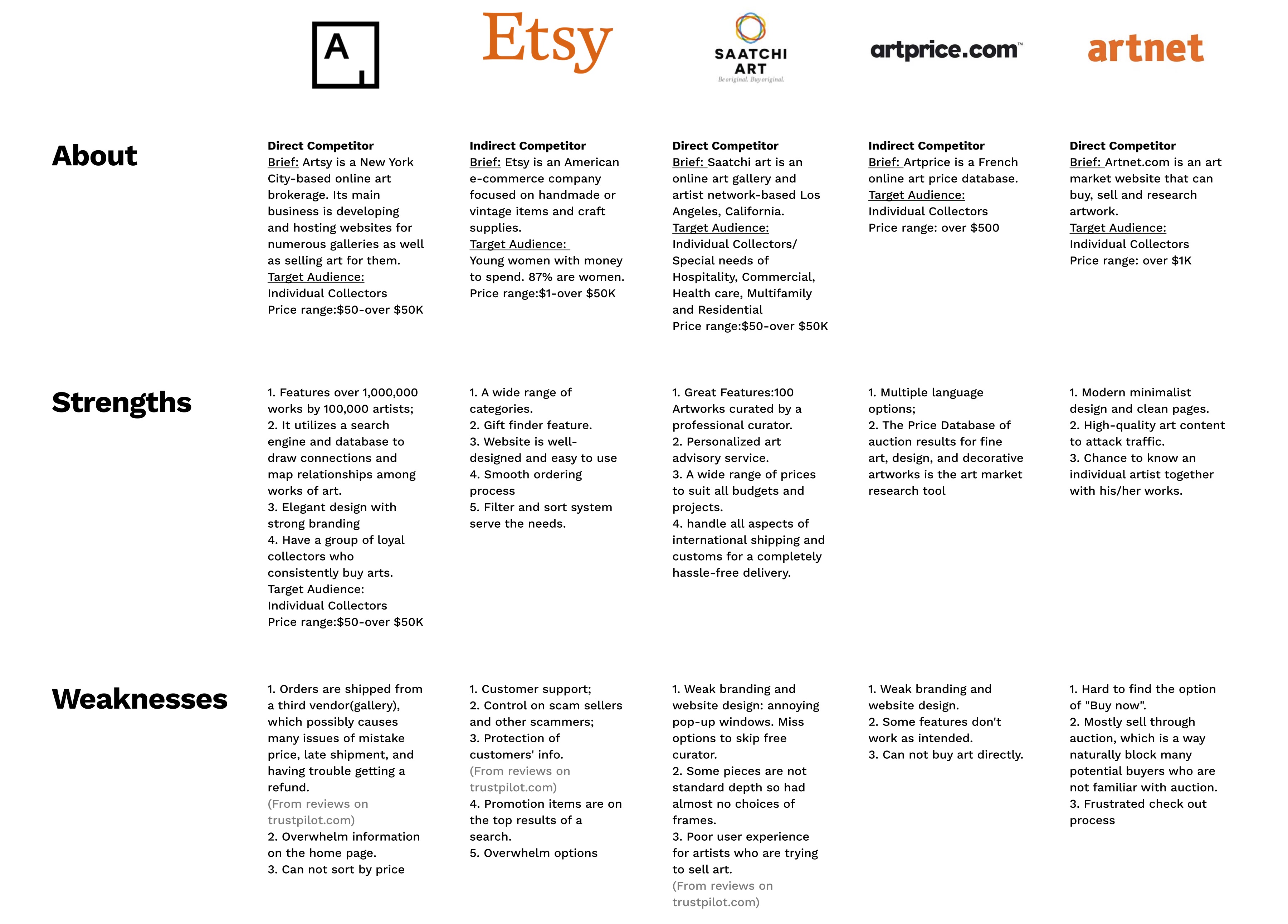
Conclusion:
- Usability problems: Many online art e-commerce platforms allow artists/designers to upload their works by themselves, which results in the varying quality and confusing prices, without uniform standard. People wasted too much time on finding their ideal piece. For the buyers, this situation usually leaves a chaotic impression. It gives users overwhelm choices.
- Gaps in the market: Limit amount of art pieces are under $500. All competitors do not have direct control over the work; after the customer places an order, the work needs to be sent from a third party (gallery or collector). This makes it impossible to guarantee the quality of the work, the speed of shipping, refunds and other after-sales service.
- Evidences of success: In terms of buying art, eCommerce could offer buyers a new way to engage with what is generally considered an opaque marketplace. It attrack more and more collectors to buy art online.
- Opportunities: Low-priced art is a scarce product in the market, especially for young women, who are also the most likely to buy art.
Empathy Research
Goal: Empathize with users, understand their needs, and inspire new design directions.
Check out the full research plan below:
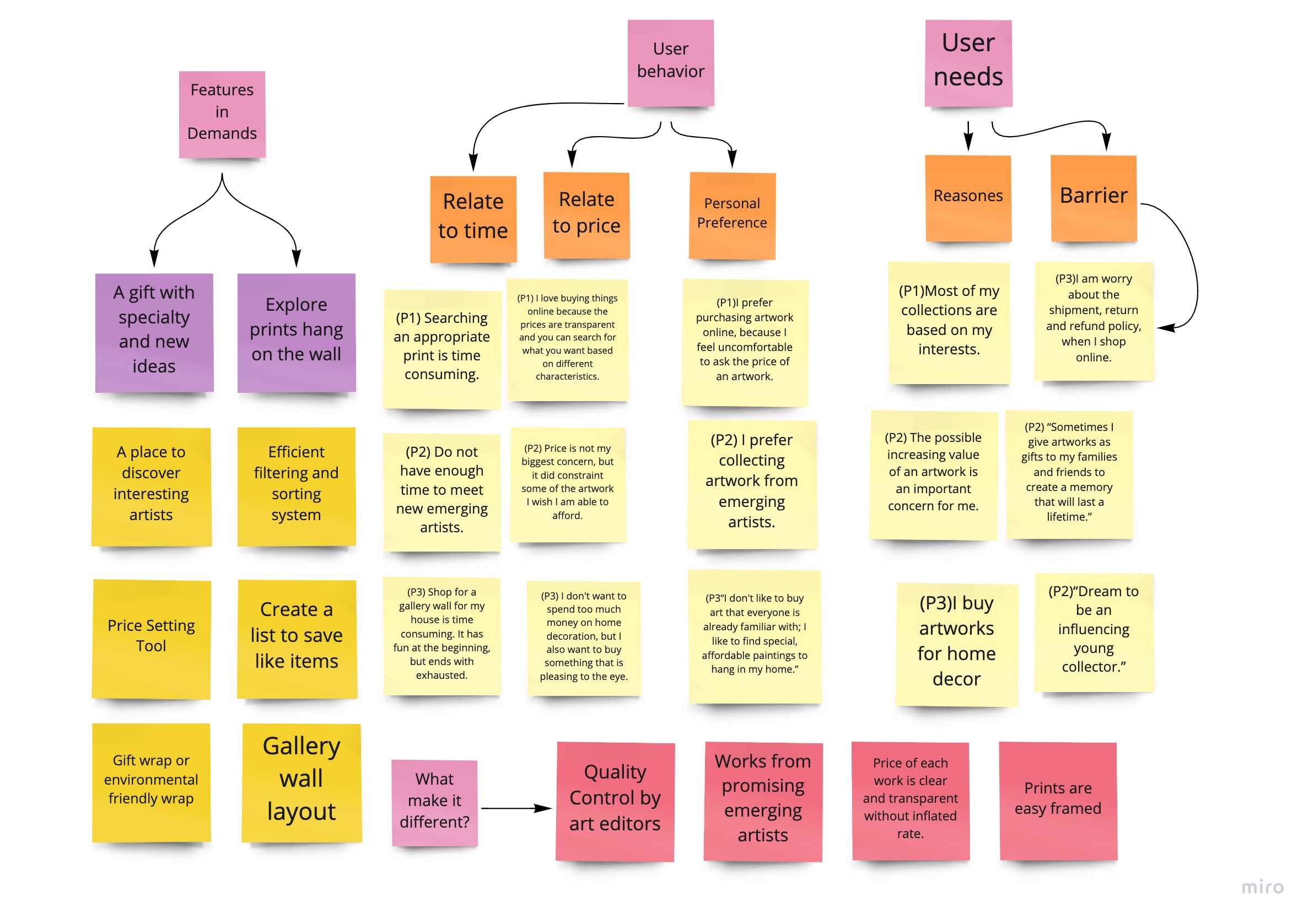
Interview Record
Empathy Map
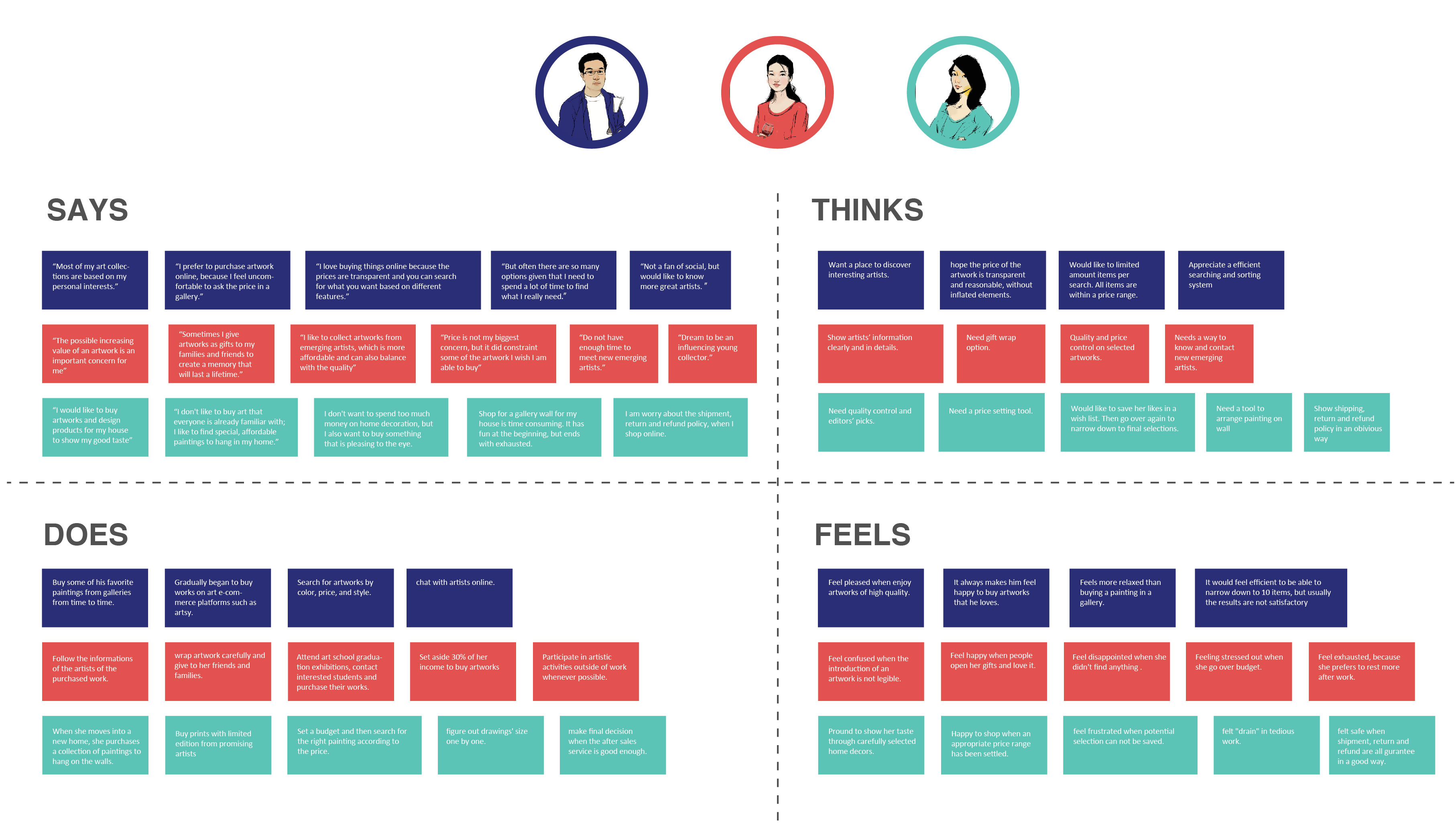
Research Findings:
Pain Points #1: The threshold of the art collection is high (the price of an artwork and requirements of rich reserved of time and art knowledge). These are two main factors that influence the decision-making of purchasing artworks.
Pain Points #2: Online shopping is time-consuming and laborious. Moreover, there are some other barriers for users to buy art online: shipment, return and refund.
Recommendations:
- People who purchasing art online are expecting: time and energy saving, pricing transparency, and a secure user platform. Therefore, it is necessary to establish a price and quality screening rules to help art lovers eliminate price concerns and choose high-quality works efficiently.
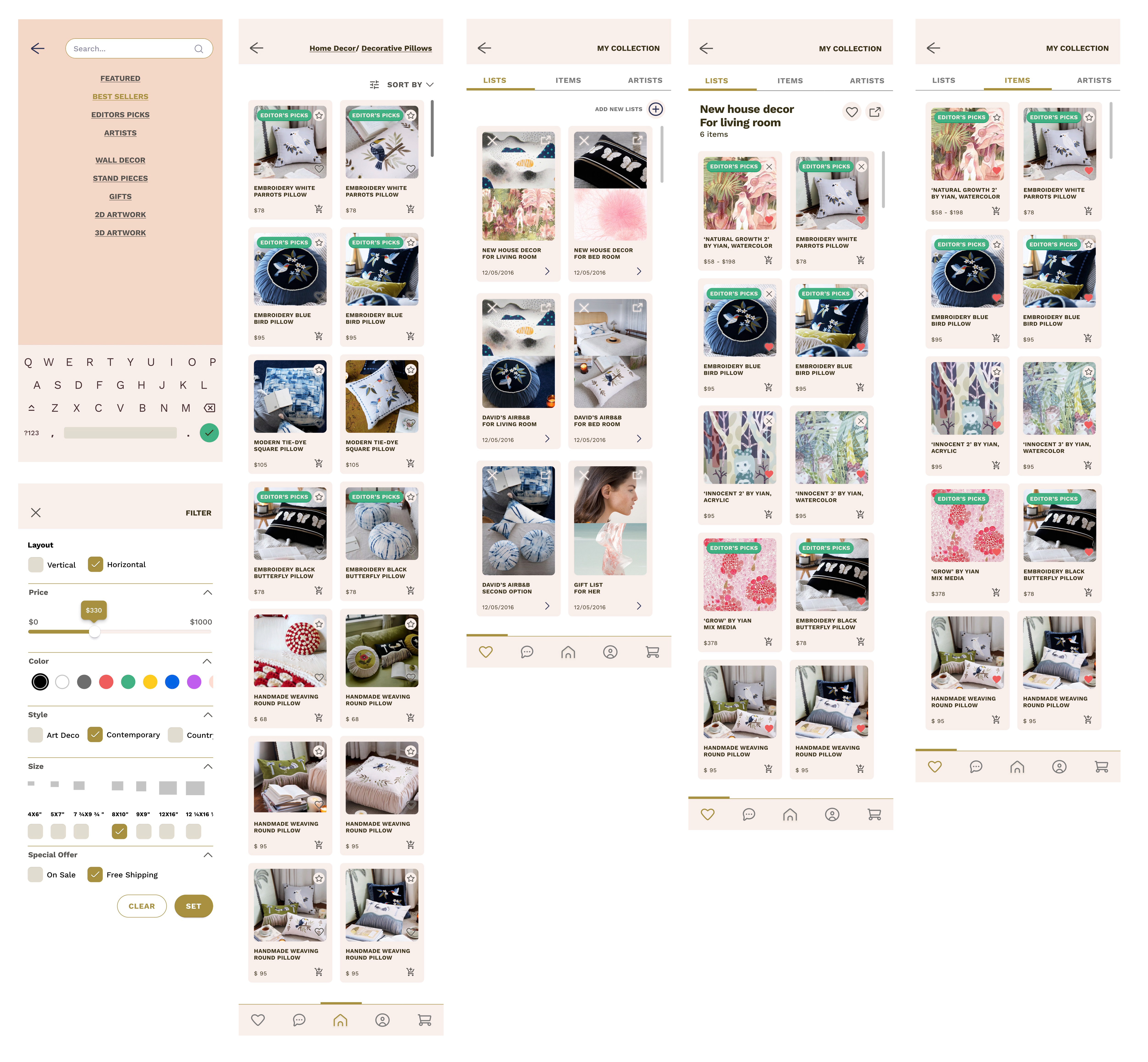
- Show limited items of high quality per search. Features help to sort and filter options efficiently are welcome. Standard sizes of prints that are easy to frame are helpful to save time and effort for users.
- Provide great after sales service (shipping, return and refund policy) and show them in an obvious way.
Empathy Summary

Survey
Research Findings:
- Home décor is the biggest reason to purchase an art work besides art investment.
- Low-priced artwork is a scarce product in the market, and artwork under $500 is the most acceptable and easiest to buy for the general public. Based on the interviews that we conducted with 20 young buyers with comparatively strong purchasing power, it shows 80% would not buy artwork above $1000 online; 60% would not buy artwork above $500 online.
- In the process of finding a product, users will lose their patience after browsing about 100 items.
Check out the full research report below:
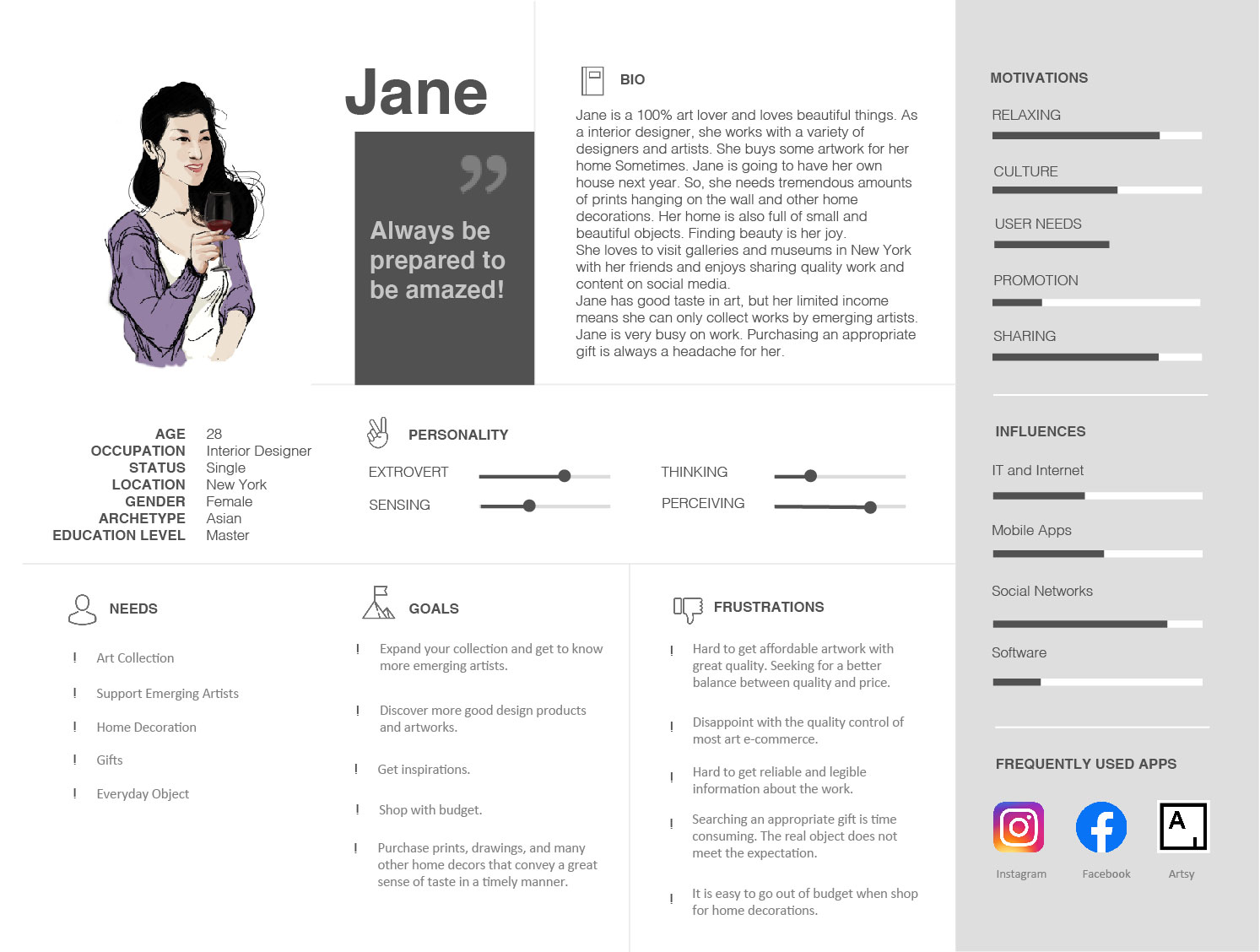
Persona
User Story
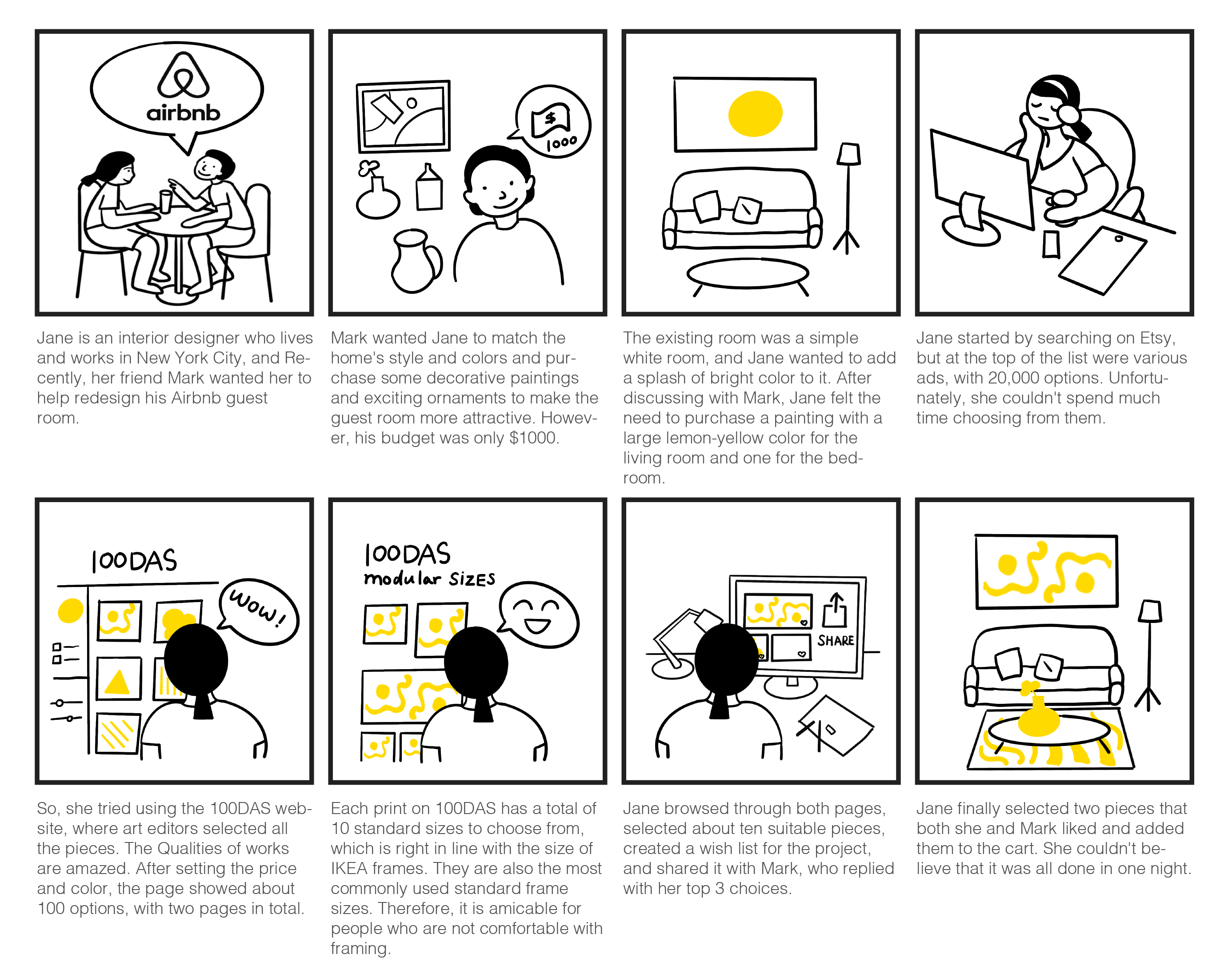
User Journey Map

2. Ideation
Problem statement:
Jane is an interior designer who needs an intuitive website and app to buy home decorations for her clients because she has a constrained schedule and limited budget.
“As an interior designer, I want to buy home decorations easily under manageable time and budget, so that I can deliver a tangible proposal to the client efficiently “
Goal statement:
100DAS responsive web & mobile app will allow users to buy artworks and design products easily which will affect how people who have a limited budget and constrained time decorate their homes with the art by giving them effective time-saving tools and design. We will measure effectiveness by analyzing the amount of time and steps to reach an ideal item.
Based on the pain point that the UI of shopping websites is too busy, we came up with the following questions:
How might we make the shopping experience fun, easy to use, and engaging?
How might we design a product that helps the users to find, highlight, or buy items efficiently?
Proposal
Sitemap

Userflow

Design Sketches
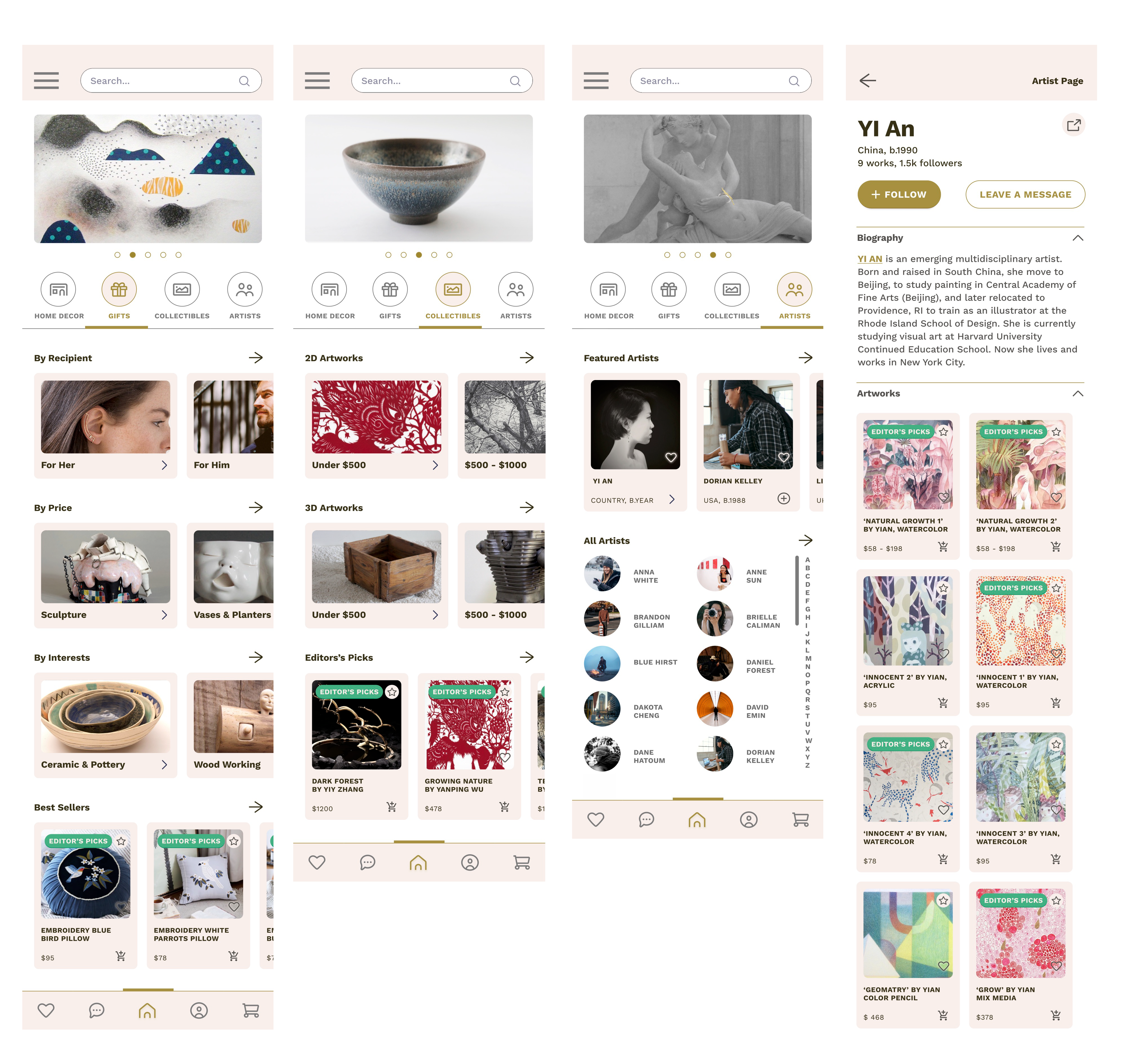
Homepage and Major Feature
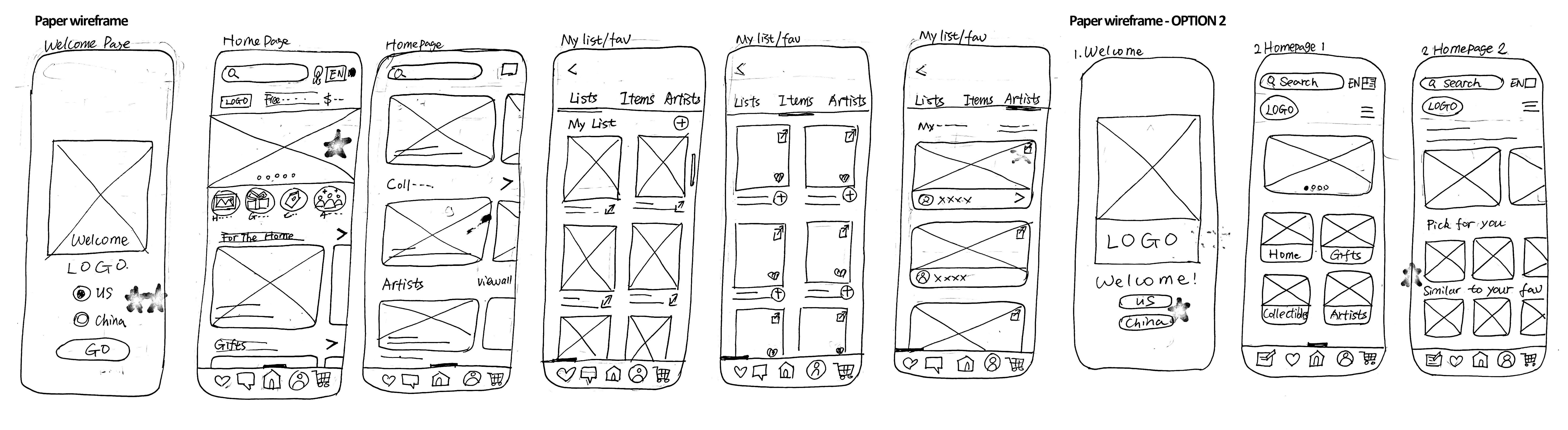
Wireframes

3. Design
Logo Design
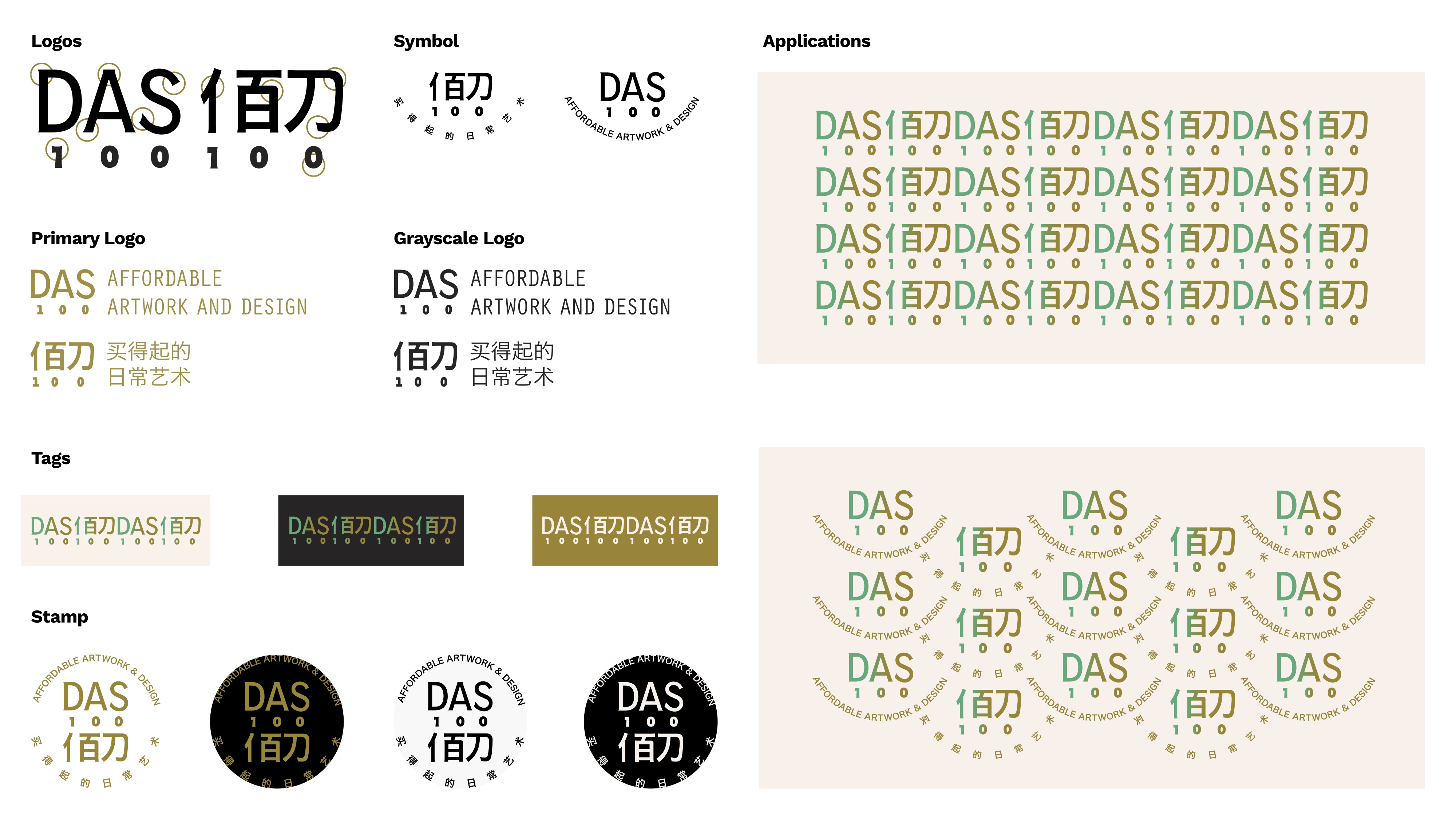
UI Kit

High Fidelity Wireframes

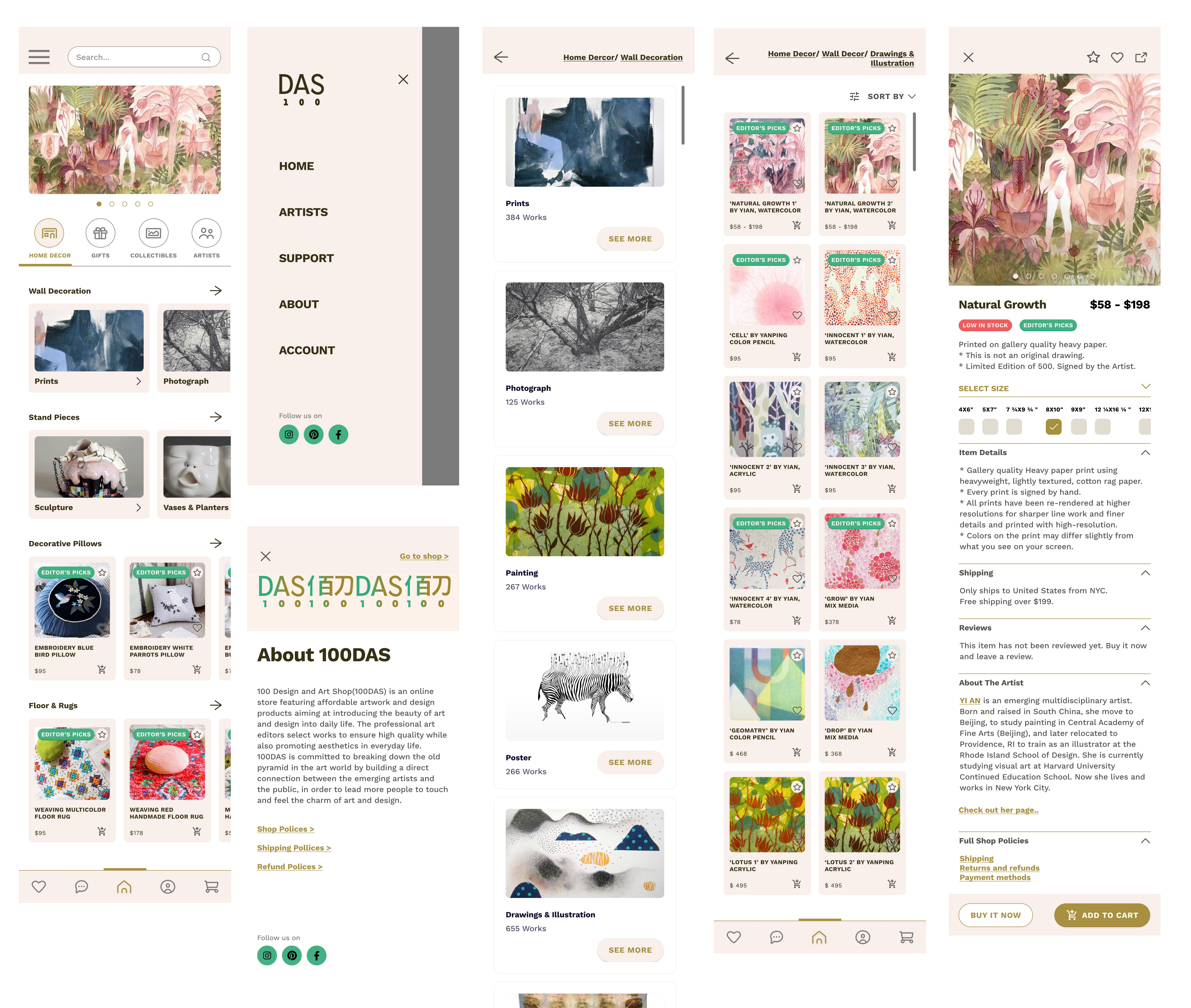


High Fidelity Prototype

Tools: Figma, Adobe XD, Photoshop, Illustrator
Duration: 160 Hours
My Role: Product Manager and UI/UX Designer
Conduct and lead the entire UI/UX design process from user research to defining features to visual and branding.
Conducted usability testing and synthesized insights.
Understand the business needs. Work with a cross-functional team in a startup environment.
 yanwangdesign.com