
Thesis Statement
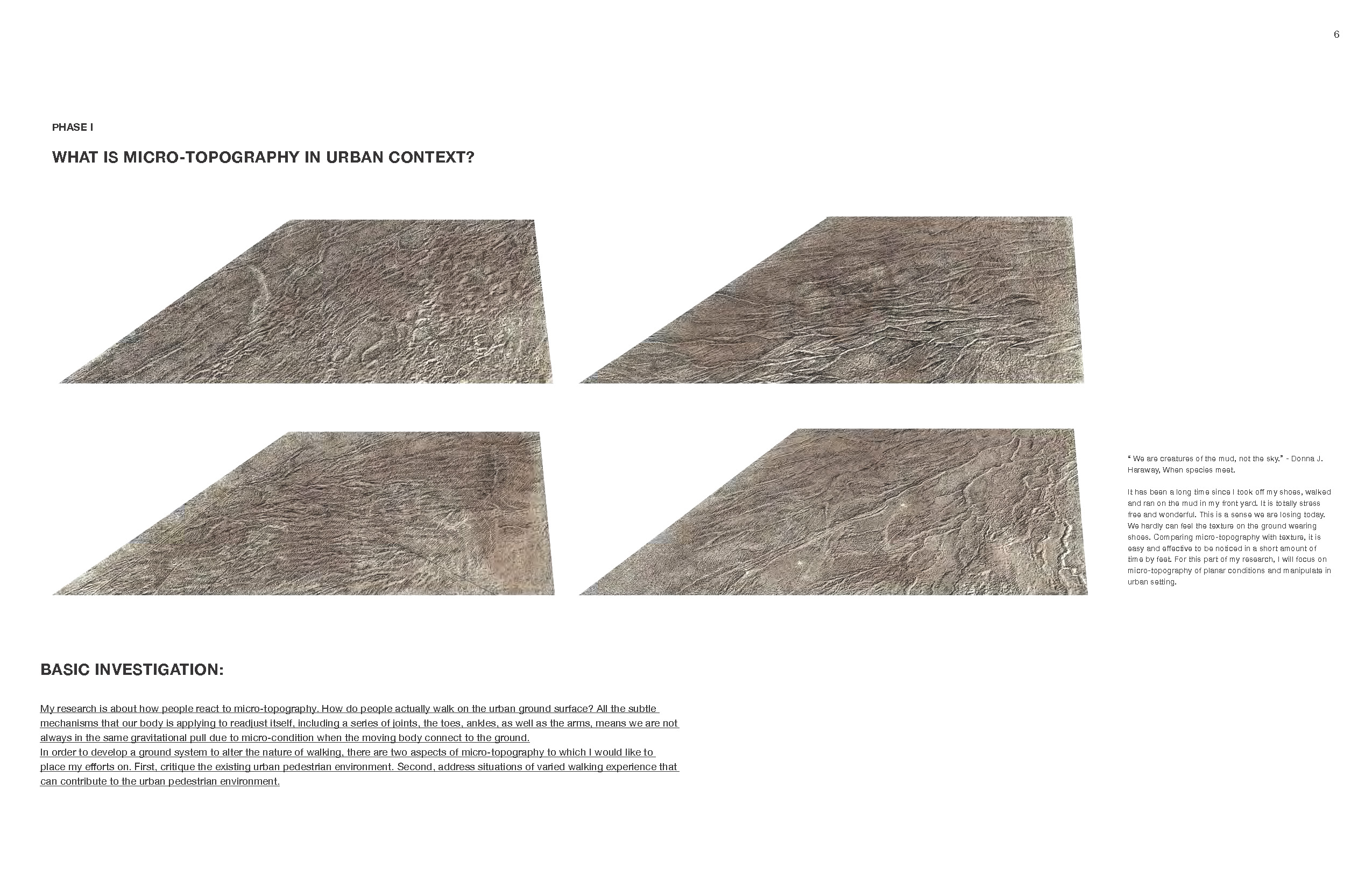
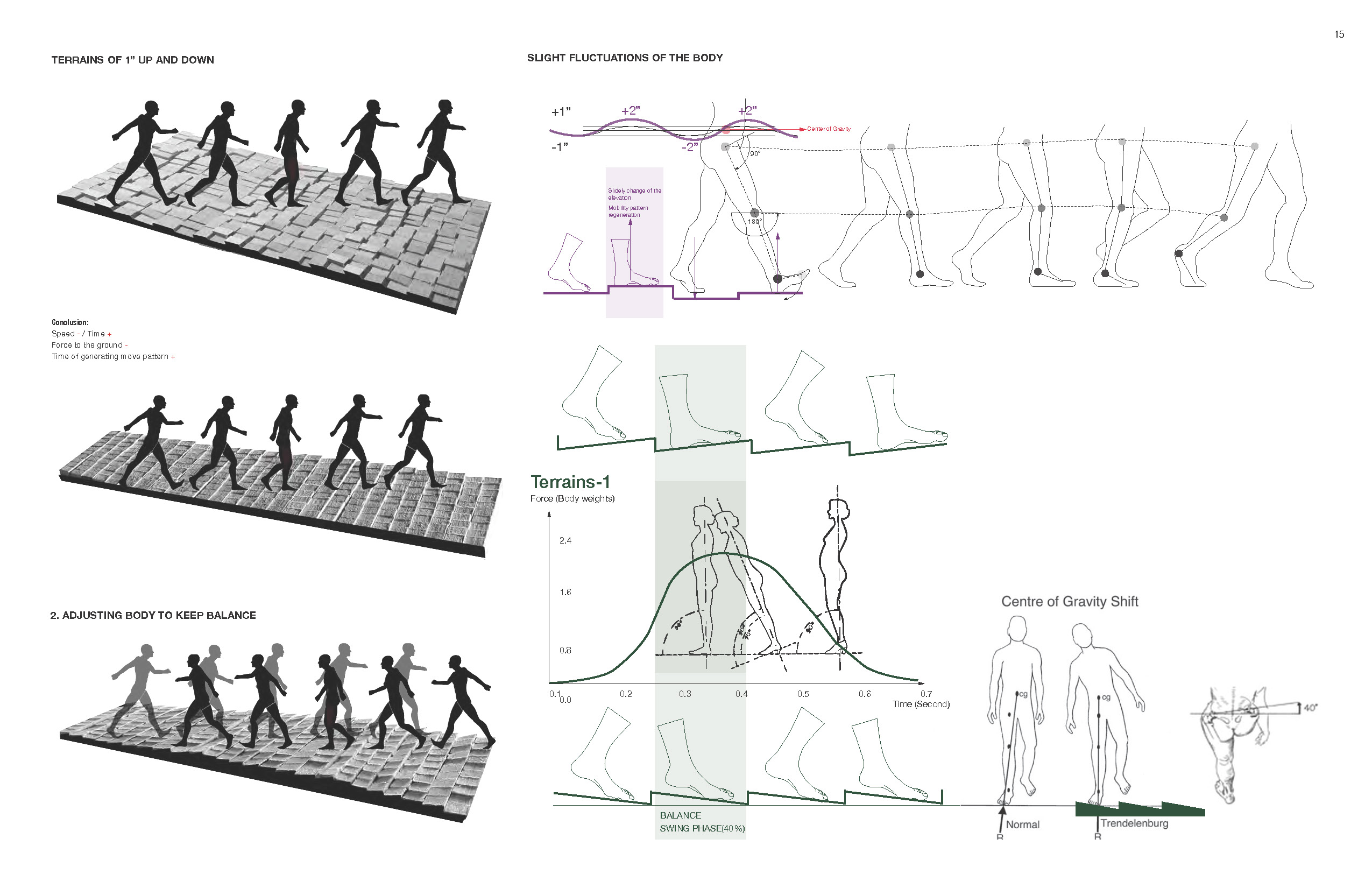
This thesis explores the relationship between the human body and the micro-conditions of the urban ground through the lens of landscape architecture. Micro-conditions are felt beneath the feet in the subtle expressions of the ground, which are characterized by the effects of the dynamic subsurface in the constructed landscape. The body, as a mechanism, tends to seek equilibrium against the quality of the ground-with every step taken the body must shift and adjust to maintain its center of gravity. This interaction, between body and ground, is the meeting point of two axis-the vertical (the moving body) and the horizontal (the ground). Body and ground are essential variables in landscape architecture and there is great potential to study and understand the meeting points of these two axes testing them against concepts and ideas of the human experience, whether for able-bodied or the disabled.
Thesis Question
How can the registration of micro-topography contribute to a fundamental relationship between the moving body and the ground, where body and ground constantly readjust to establish the balance?
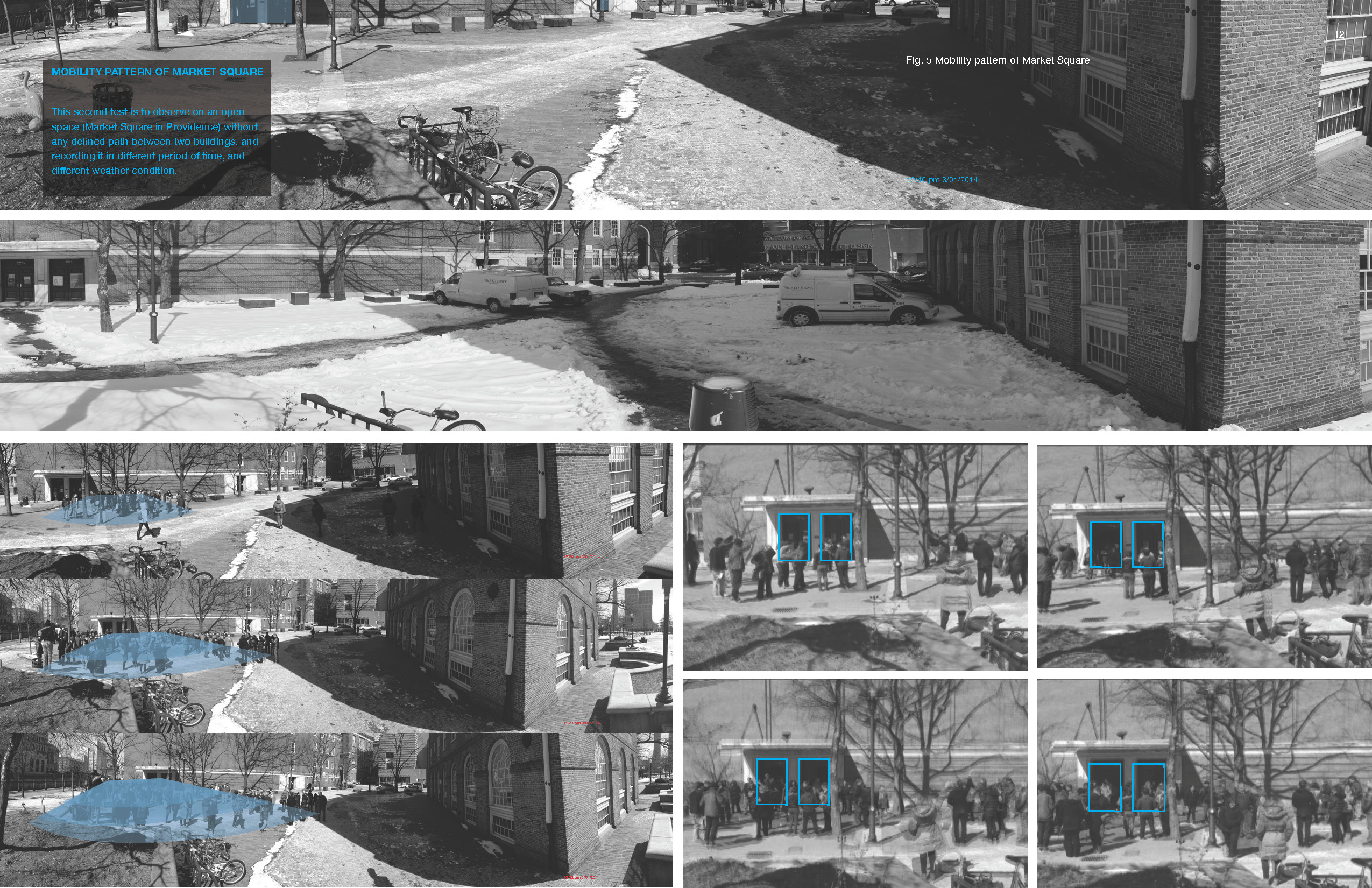
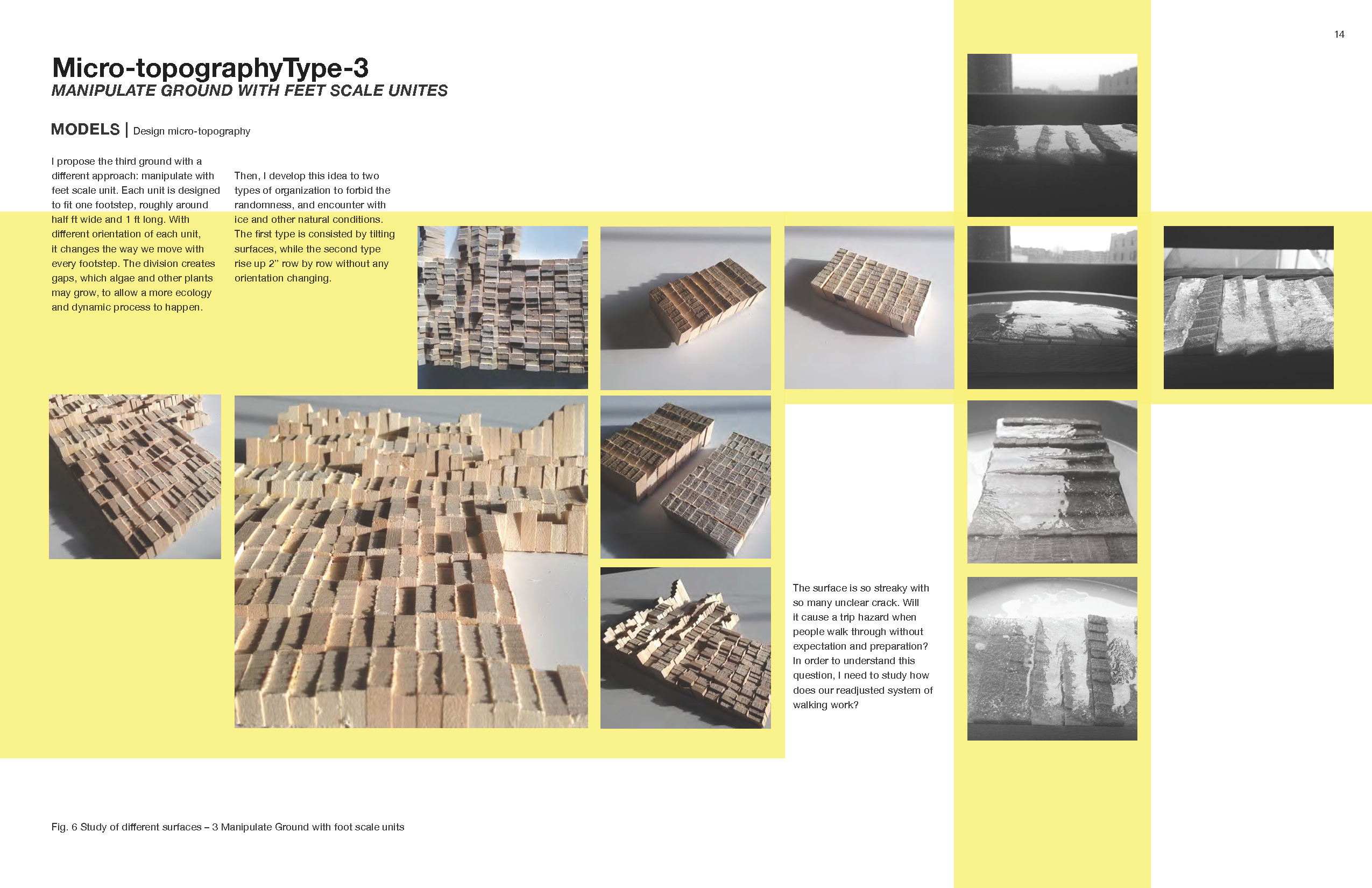
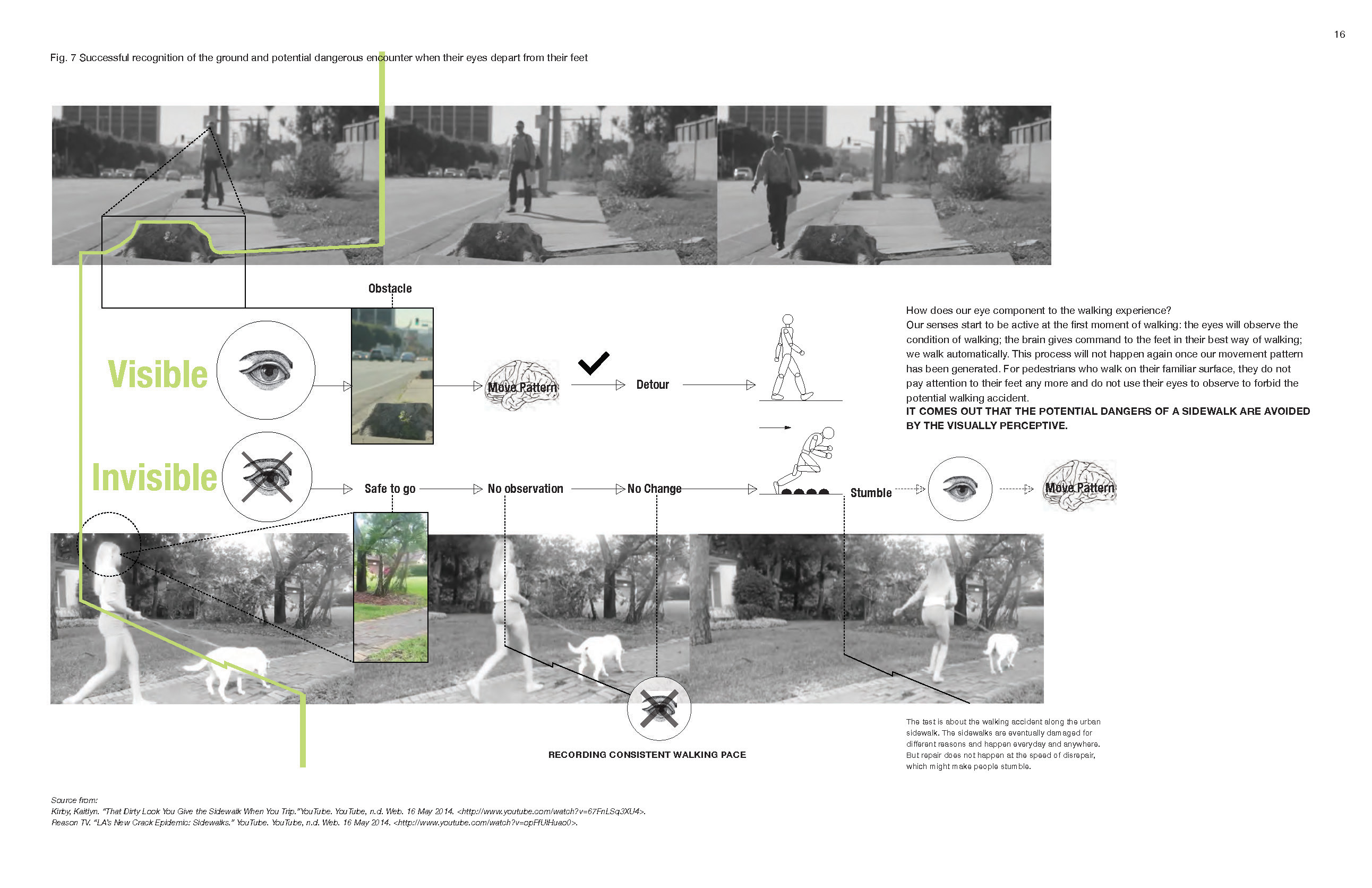
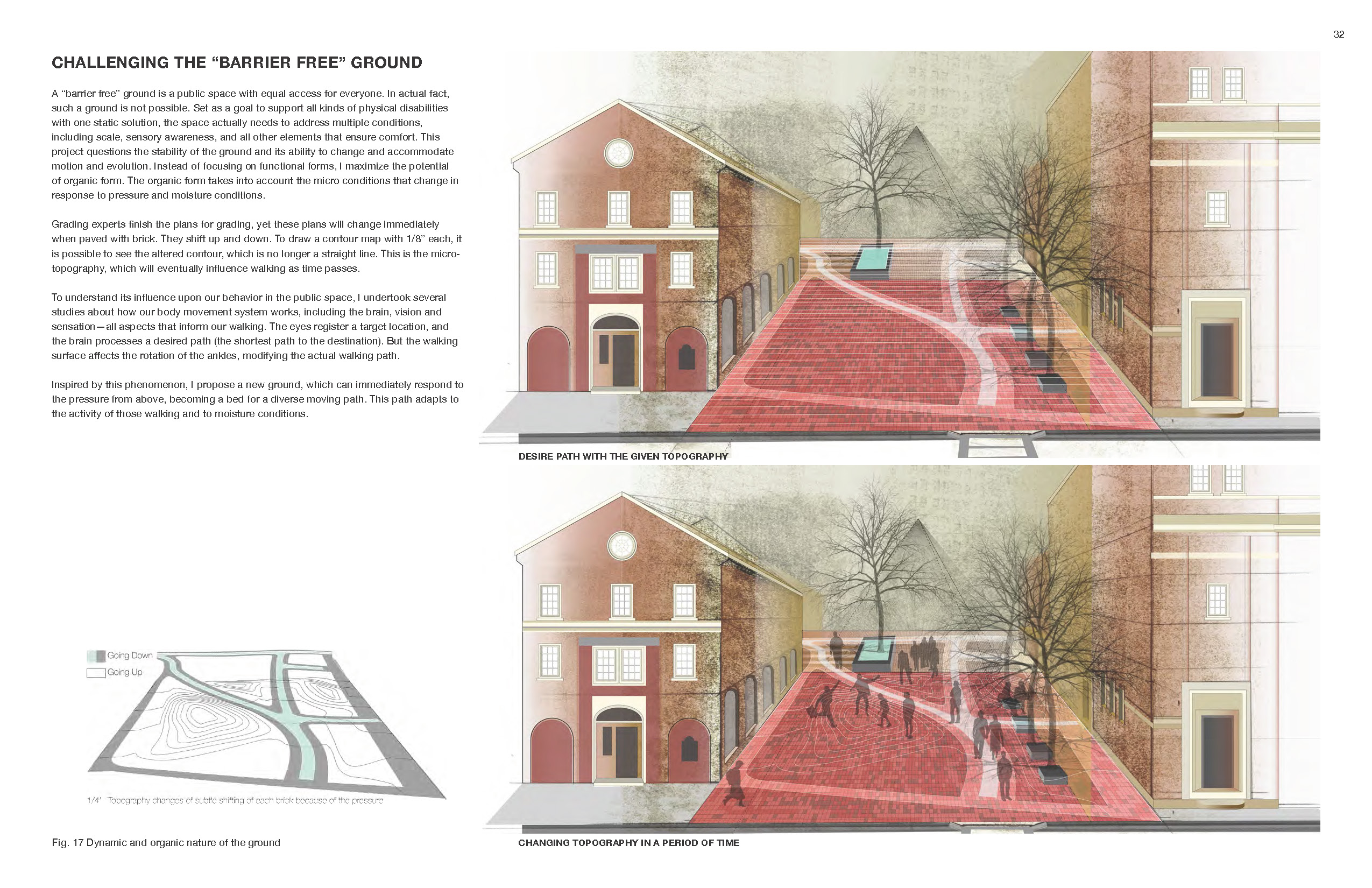
This thesis is not talking about movement on the even horizontal ground. It focuses on a dynamic situation in which moving bodies subtly adjust to the ground as both surface and organic substrate. The investigation presents possible modification systems (micro-topography) that affect the way we move on foot in our city pedestrian environment. Specifically, it explores techniques for balancing between vertical and horizontal movement axes. Methods of spatial observation visual and tactile perception testing are developed in relation to a understanding of physical ground conditions.
Application
1. Place engagement.
Place engagement registers methods for pedestrian participation and contribution to a place. Literally the first step making a place begins with pedestrians defining paths through the urban streetscape. This motion of walking through an environment defines a dynamic system of environmental response, which reflects behaviors of adaptation.
2.Rehabilitation.
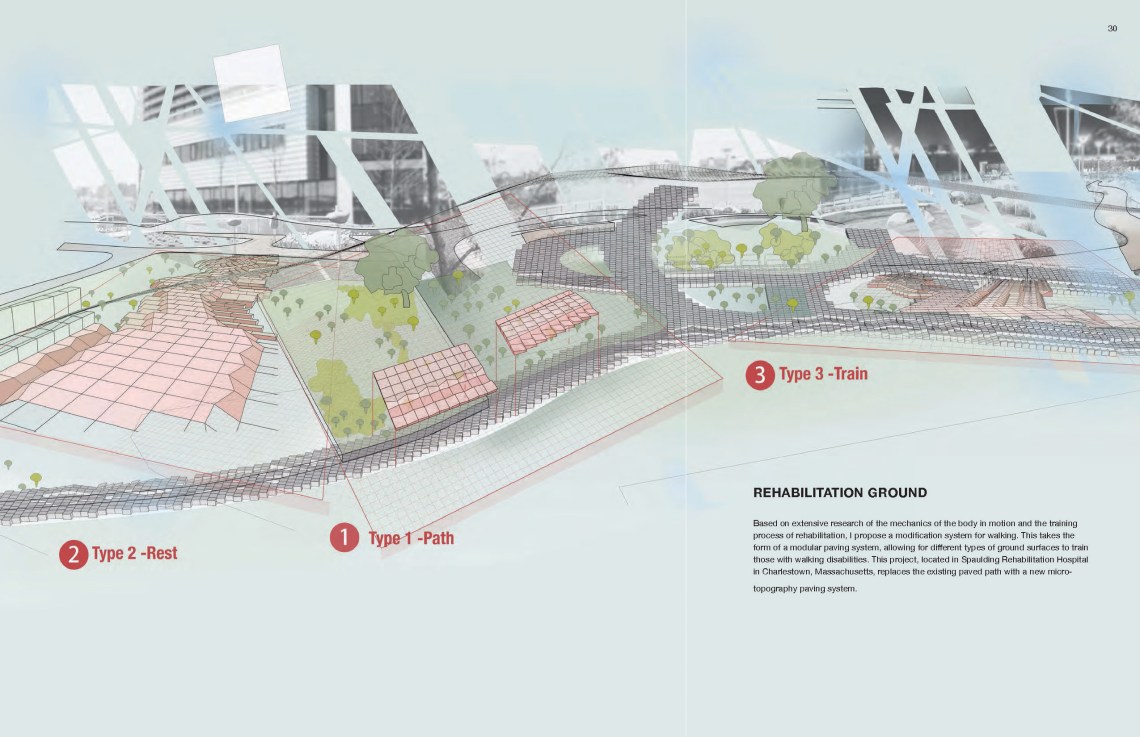
This is an exploration of a basic human condition placed into any contexts. If can be applied to rehabilitation hospital, especially for people to relearn and rebuild this relationship after they lost their ability of walking and for the elderly, who are much easier to hurt bones and columns while walking.
Topics
Improving place engagement through micro-topography considerations.
1. Micro-topography considerations are the engine for spatial transformation. In this transformation, the status between micro textures and changes in landforms are explored to negotiate a better fit to support the ambulatory cadence.1. Micro-topography considerations are the engine for spatial transformation. In this transformation, the status between micro textures and changes in landforms are explored to negotiate a better fit to support the ambulatory cadence.
2. Embodied experience allows pedestrians to register a physical and sensible assimilation of place.
3. Highlighting textual variations expressed through materials and their functional use enhances sensory acuity within the environment—the sensual touch of what is under foot.
Individual Academic Work
Duration: 01/2014-05/2014
© 2014 Yan Wang
All rights reserved. No part of this document may be reproduced or transmitted in any form or by any means without prior written permission of Yan Wang.
All images courtesy of the authors unless otherwise noted. All reasonable attempts have been made to identify owners of copyright. Errors or omissions will be corrected in future editions.










 yanwangdesign.com